
The National Urban Indian Family Coalition elevates a national voice for American Indians and Alaska Natives living in urban communities and sustains Indigenous values and culture through a strong network of urban Indian organizations.
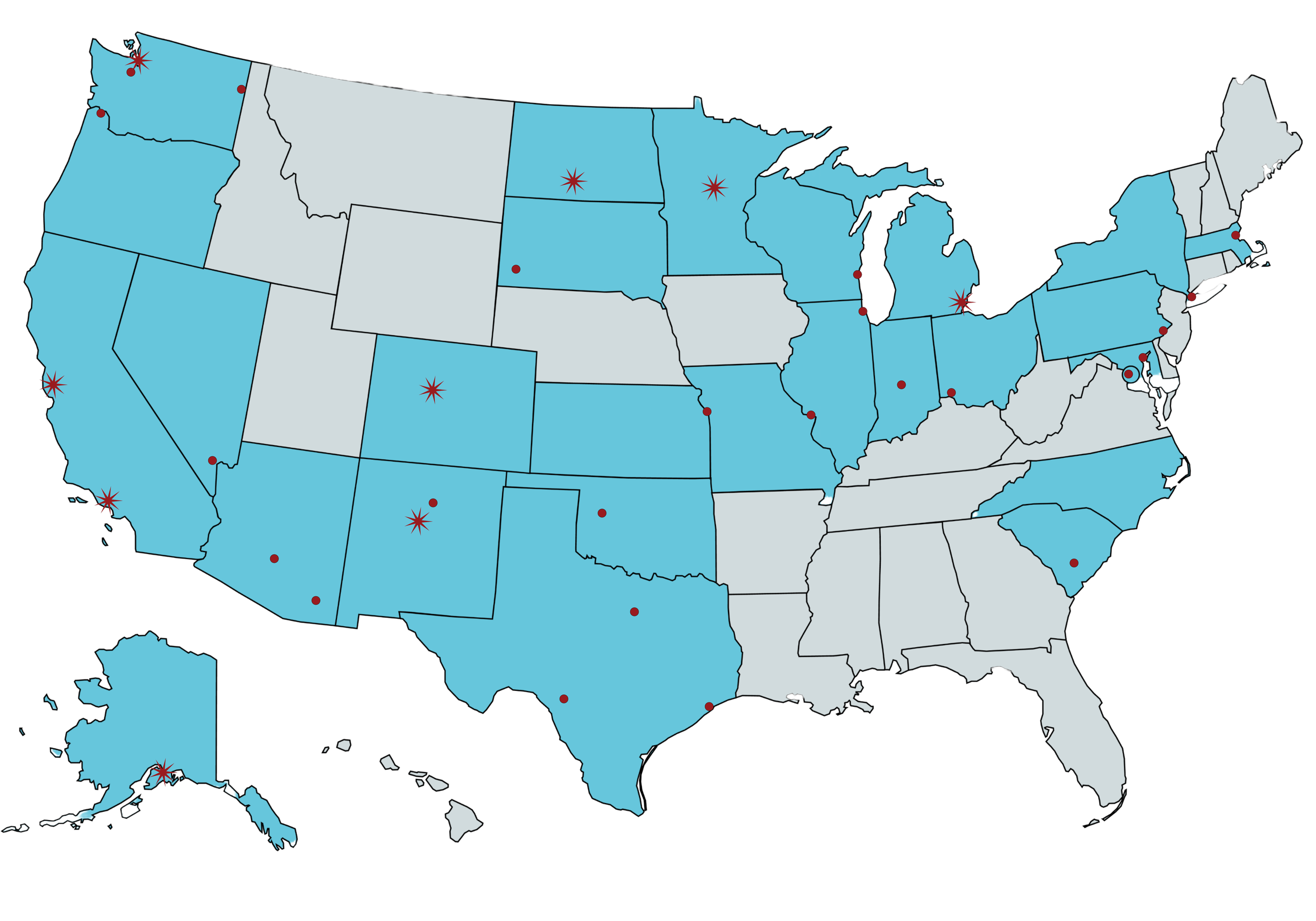
Through close collaboration with urban Native nonprofits, NUIFC works to enhance the well-being of communities where our people reside. We are honored to support organizations offering frontline care to millions of American Indians and Alaska Natives living in urban cities. These groups are too often invisible and marginalized and make up the backbone of urban Indian America. Our communities have a long-standing tradition of organizing nationwide, and NUIFC is honored to organize alongside them in building a brighter future for urban Indian America.
Our member urban Native nonprofits offer essential services to their communities. They also act as vital institutions that ground us, giving us a voice and a space to gather and practice our diverse Indigenous cultures. NUIFC exists to organize alongside them and to strengthen the power they already hold.
Our Impact

urban indian DEMOGRAPHICS
American Indian families and children are among the most vulnerable of America’s urban populations. Today, of the 9.6m Native Americans living in the U.S., more than 78% live off of reservations and lack a collective national voice. Native people residing in urban areas are amongst the most invisibilized populations in the nation, yet we represent a majority portion of Native people in the United States: Of the 78% residing off reservation - 68% of all American Indian/Alaska Natives (AI/AN), and 78% of all AI/AN children live in cities. This invisibility has created and perpetuates extreme disparities across all the major sectors of life and community for tribal citizens living in cities including children and family services, housing and homelessness, economic development and employment, and health and wellness. Deficient socio-economic indicators are all related to and solvable through policy engagement and ensuring that Native voices are reflected in policy discussions that stem from showing up and impacting elections.
The Native population is diverse, geographically dispersed, and difficult to identify through the national and state voter databases. Yet racially and culturally specific social service organizations and health centers play a key role as civic centers of the community. They are also active in their community, being present or planning American Indian events that bring the community, allowing them to further conduct voter engagement outreach. These urban based American Indian nonprofits are quite literally the “front line” organizations that provide services to the Native community and have often spent decades building trust with their client base.
While invisibility remains one of the most challenging aspects of contemporary Native life, as a community, we are our own best protagonists. Our communities have found ways to thrive in bustling metropolises and bring visibility to our issues. Some of our best protagonists are those Native people who are in positions of power – in politics, philanthropy, and business.